Blog · March 2026 · 5 min read
Why Text-On-Screen UGC Is Killing Your App Growth
Everyone is producing UGC. Almost nobody is getting results.
Thienvu Vo, Founder of Vo Creations
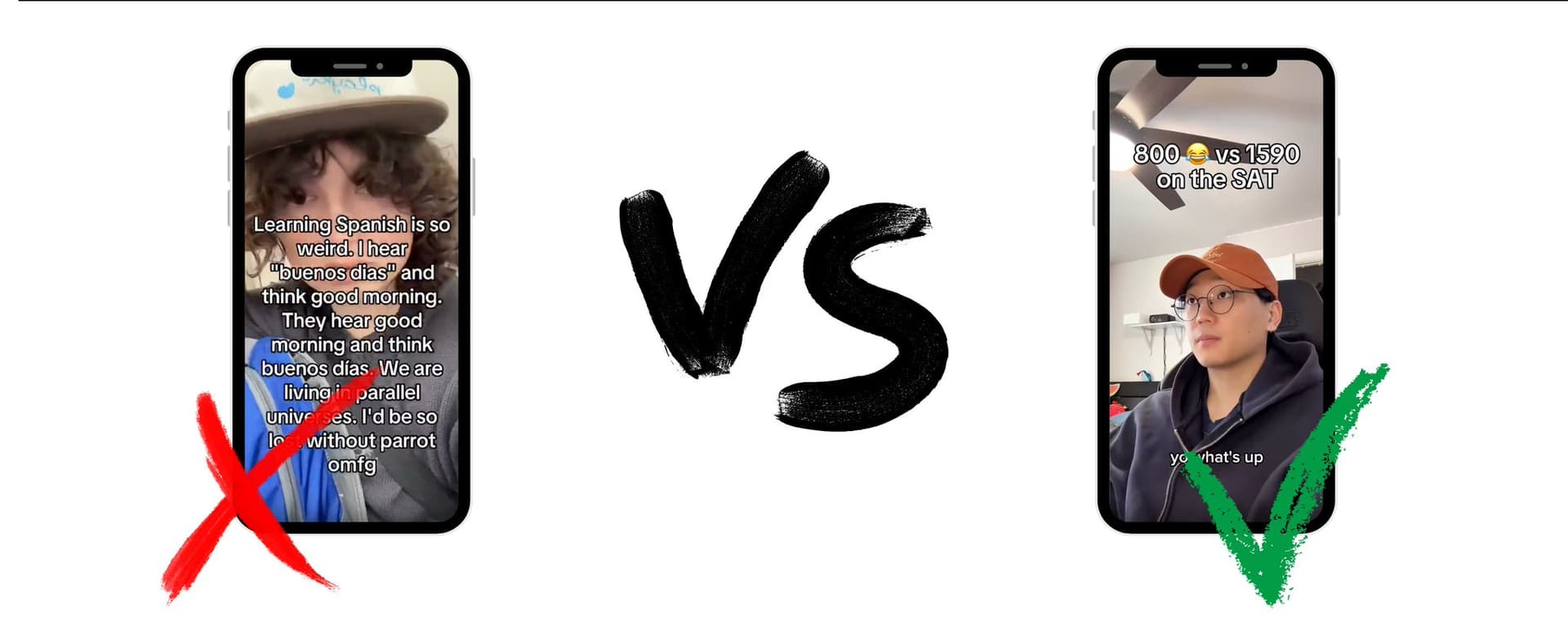
You're not alone. Most founders still don't understand what UGC actually is. You just haven't seen what it actually looks like yet.
The problem
99% of text-on-screen videos do the same thing: text overlay, trending audio, product shot, call to action. They get a few thousand views, drive zero conversions, and the founder wonders why "UGC doesn't work."
It's not that UGC doesn't work. It's that text-on-screen isn't UGC. It's a format that looked like UGC for about six months in 2023, and the algorithm moved on. Most brands didn't.
Here's what text-on-screen actually does: it communicates information. It tells you what the product is, what it does, maybe shows a demo. That's it. There's no emotional hook, no relatability, no story. The viewer gets the gist in 2 seconds and swipes.
People don't buy products they feel nothing about. They buy products that made them feel understood, seen, or excited, before they even opened the app store.
What real UGC is
A real person on camera telling a story. That's it. No fancy editing. No text overlays. No AI voiceover. Just a human face, a real voice, and a narrative that makes the viewer feel something.
The best-performing UGC we've ever made follows the same structure: a creator looks into the camera and tells a story that the target audience has lived. The product shows up naturally, not as a pitch, but as part of the story.
This isn't theory. This is what we've tested across dozens of campaigns, millions of views, and multiple verticals. The data is clear:
- 6.9×UGC vs brand engagement
- 4× higherUGC ad click-through rate
- 50% lowerCost per click
- 100%+Conversion lift, interactive UGC
Why storytelling works
If your instinct is "I need to explain what my product does," you're thinking about this wrong. Nobody cares what your product does. They care about how it makes them feel.
The reason talking-head storytelling outperforms everything else is simple: it triggers mirror neurons. When a viewer sees someone who looks like them, talks like them, and describes a problem they've actually experienced, the brain doesn't process it as an ad. It processes it as a conversation.
That's the entire game. Get past the ad filter. Storytelling does that. Text on screen never will.
What storytelling does that captions never can
Text-on-screen
- Viewer learns product name
- No emotional response
- One algorithm cycle
- Can't become a paid ad
- No comment engagement
- Disposable by design
Storytelling
- Viewer feels understood
- Builds brand equity
- Compounds over time
- Organic to paid bridge
- Comments become social proof
- Every video is a future ad
1. Builds brand equity. Every talking-head video that resonates adds to a compounding library of trust signals. Text-on-screen is disposable. You watch it, get the info, and forget the brand. Storytelling creates emotional memory. The viewer remembers how the video made them feel, and that feeling gets attached to the brand.
2. Creates the conversion window. The moment a viewer thinks "this is exactly what I needed" is the moment they convert. Text doesn't create that moment. A story about a student who failed three exams and then found the tool that changed everything. That creates the moment.
3. Becomes a paid ad. The best organic content is also the best ad creative. When a talking-head video goes viral organically, you already know the story, hook, and emotional arc work. You just put budget behind it. With text-on-screen, you're always guessing, because there's no story to validate.
Running winning organic content as ads crushes. But posting ads as organic doesn't work. The content has to earn attention first.
The comment section is your real conversion engine
The video gets the view. The comment section closes the sale. This is the part most brands completely ignore.
When a talking-head video resonates, the comments fill with people saying "I needed this," "where was this when I was struggling," "link??", and tagging friends. That comment section becomes a live testimonial wall. Every new viewer doesn't just see the video. They see hundreds of people validating the product underneath it.
Text-on-screen videos almost never generate that kind of comment engagement. There's nothing to react to. Nothing to identify with. The comment section stays empty, and the algorithm reads that as a signal to stop pushing the video.
You can't buy compounding social proof. You can't fake it. You can only earn it with real storytelling.
Proof
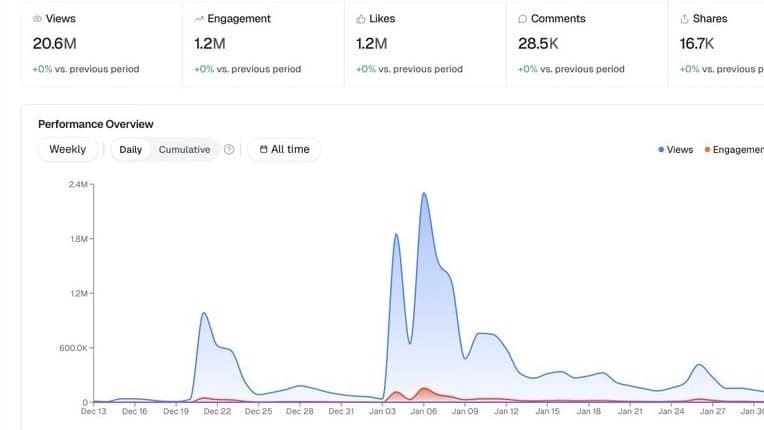
No text on screen. No AI clone. Just real people telling stories that made viewers feel something. That's how we generated 20 million views in 30 days for a single campaign, with 3 creators and a $10K budget.
The equivalent ad spend to reach the same audience? Roughly $200K. And paid ads don't come with the compounding social proof of a comment section full of people saying "this changed everything."
How to do it
- Find the story. Don't start with features. Start with the most emotionally specific version of the problem your product solves. Not "students struggle with the SAT." Try: "A student studied 5 hours a day, took 6 practice tests, and still scored 800." That specificity is what makes someone feel seen.
- Stop optimizing the wrong things. Video length, hashtags, posting time. None of it matters if the story doesn't land. The only thing that determines if a video converts is whether the viewer felt something.
- Cast the right person. The creator has to look, talk, and feel like the person watching. A study tool? College student. A dev tool? Developer. Authenticity isn't about acting. It's about casting someone who's actually felt the problem.
- Show, don't pitch. Demo the product like you're showing a friend. One flow. One outcome. No feature list. Let the product appear naturally within the story.
- End with access, not an ad. Don't say "download now." Frame the CTA as something exclusive: "Comment X and I'll send you the method." It converts higher because it feels personal, not promotional.
The UGC market is projected to grow from about $10B to $35B+ by 2030. AI content is flooding every feed, which makes authentic human storytelling more valuable, not less. Text-on-screen had its moment. It's over.